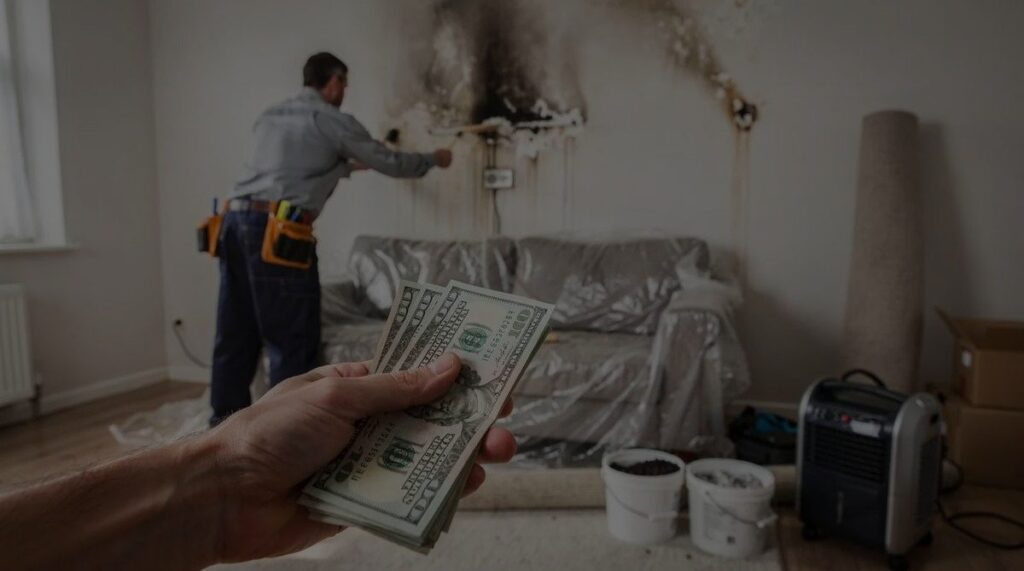
Homeowners weighing cash pay versus insurance claims for fire damage restoration face a critical financial decision. Insurance claims typically close in 30 to 45 days, with adjusters assessing damage and issuing lump-sum payouts. Out-of-pocket payment enables immediate mitigation, preventing further smoke and structural damage, but requires available funds. American Standard Restoration specializes in professional water damage restoration for homes and businesses throughout Tacoma, WA.
Key Takeaways
- Insurance claims for fire damage typically close within 30 to 45 days after adjuster assessment and lump-sum payout issuance.
- CLUE report fire damage entries remain on property records for up to seven years, affecting future insurability and rates.
- Filing a claim creates permanent insurer records that trigger premium increases compounding year after year for homeowners.
- Out-of-pocket soot cleanup costs less than premium increases a claim triggers over three to five years combined.
Should you pay cash or file an insurance claim?
The decision to pay cash or file an insurance claim for fire damage restoration hinges on policy limits, deductibles, and long-term premium impacts. Property owners face a financial fork in the road with no universal right answer. Each path carries distinct consequences for both immediate costs and future insurability.
What factors determine whether paying cash makes more sense?
Three variables tip the scale toward out-of-pocket fire damage restoration. First, when repair estimates fall below or near the deductible, filing a claim yields no payout while still recording the incident. Second, minor soot cleanup jobs often cost less than the premium increases a claim triggers over three to five years. Third, a CLUE report fire damage entry stays on the property’s record for up to seven years, potentially deterring future buyers or raising rates for the next owner.
How does filing a claim affect future insurance costs?
Filing a fire damage insurance claim vs self pay decision changes the property’s risk profile in insurer databases. A single fire-related claim can increase annual premiums substantially, according to industry data cited by Paul Davis Restoration. That increase compounds year after year. The cost of fire damage restoration cash pay often looks steeper upfront but avoids the hidden expense of higher premiums stretching far into the future.
| Factor | Paying Cash | Filing a Claim |
|---|---|---|
| Immediate cost | Full amount out of pocket | Deductible only |
| Premium impact | None | Increase possible |
| CLUE report entry | No record created | 7-year record |
| Coverage for major loss | Policy limits untouched | Reduces available coverage |
Insurance coverage for restoration is limited and often dependent on the cause of damage. Property owners should research their policy before deciding. Cash pay for fire damage restoration preserves claim-free status and keeps future coverage intact for catastrophic events. For extensive structural damage, filing becomes the financially rational choice. Soot cleanup out of pocket works best for isolated, surface-level damage where professional cleaning costs stay manageable.
Does the cause of fire damage affect the decision?
The cause of damage directly shapes what a policy covers. Insurance policies provide a safety net against disaster. Coverage for restoration remains limited and often depends on how the damage occurred. Smoke damage from a neighbor’s fire may fall under different policy provisions than a kitchen grease fire. American Standard Restoration delivers rapid 24/7 response with IICRC-certified experts who handle mitigation through full repairs, helping property owners assess damage scope before committing to either payment path.
What does cash pay for fire damage restoration cost?
Cash pay for fire damage restoration costs depend on structural damage severity, affected square footage, and soot cleanup complexity. No fixed price applies to every property. Once you file a fire damage claim, your insurance company will send an adjuster to inspect the damage and estimate the cost of restoration. Property owners paying directly face the same variables without an adjuster’s buffer.
Out-of-pocket fire damage restoration shifts full financial responsibility to the homeowner. Insurance policies cap payouts at coverage limits. When repair costs exceed those limits, the remaining balance falls entirely on the property owner. This gap catches many homeowners off guard after major fires.
What factors drive the cost of soot cleanup out of pocket?
Soot type and penetration depth determine cleanup expense. Light surface soot costs less to remediate than oily residue embedded in drywall and ductwork. Professional soot cleanup out of pocket also varies by room count and whether HVAC systems require decontamination.
How can property owners get a clear cost estimate before paying cash?
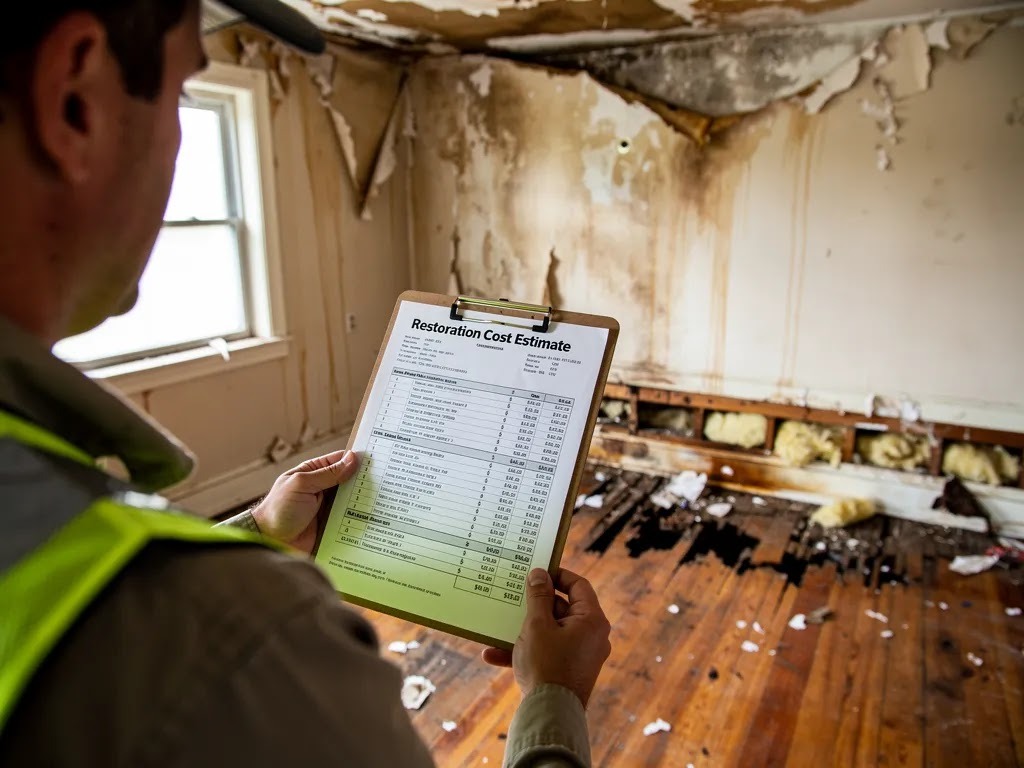
American Standard Restoration provides fast quotes and easy scheduling by phone or online request. The company’s assessment gives property owners a detailed cost picture before committing to cost of fire damage restoration cash pay. This upfront clarity helps homeowners weigh repair scope against budget realities without waiting on an insurance timeline.

How does a fire damage insurance claim vs self pay affect your future premiums?
Filing a fire damage claim creates a permanent record that insurers use to price future policies. A fire damage insurance claim vs self pay decision carries consequences that extend years beyond the restoration itself. Every claim submitted to a homeowners policy gets logged in the Comprehensive Loss Underwriting Exchange, known as a CLUE report fire damage entry. That entry follows the property and the policyholder. Insurers consult CLUE reports when underwriting new policies or renewing existing ones. A single fire-related claim can trigger premium increases at renewal, according to industry data tracked by state insurance regulators. Multiple claims within a three-year window often lead to non-renewal or outright denial of coverage.
What happens to your CLUE report when you file a fire claim?
A CLUE report catalogs every loss reported to an insurer, regardless of whether a payout occurred. Even a small inquiry about coverage can generate an entry. Fire damage claims carry particular weight because they signal elevated future risk to underwriters. The report remains active for seven years. During that period, any insurer reviewing the property sees the claim history and adjusts pricing accordingly. Property owners who switch carriers after a fire claim frequently encounter higher premiums or limited policy options.
Does paying out-of-pocket keep your insurance record clean?
Choosing out-of-pocket fire damage restoration for minor damage keeps the CLUE report spotless. No claim means no entry. No entry means no premium surcharge at renewal. This approach works best when repair costs fall below or near the policy deductible. For example, a small kitchen fire with soot and surface damage costs less to handle directly than the cumulative premium hikes a claim triggers over several years. Soot cleanup out of pocket also avoids the adjuster’s inspection, which sometimes uncovers unrelated maintenance issues that affect coverage. The trade-off is straightforward: immediate cash outlay versus long-term insurability. Property owners weighing the cost of fire damage restoration cash pay against potential premium increases should request a repair estimate before contacting their insurer. Once a claim is reported, the CLUE entry cannot be undone, even if the claim is later withdrawn or denied.
When does soot cleanup out of pocket make sense?
Paying for soot cleanup out of pocket makes sense when fire damage is minor and contained. A small kitchen fire or a single-room smoke event often costs less to clean directly than the deductible plus future premium increases tied to a claim. For limited smoke and soot damage, out-of-pocket fire damage restoration avoids the claims process entirely.
What counts as a minor soot cleanup job?
- Soot staining on walls or ceilings in one room
- Light smoke odor after a small cooking fire
- Surface residue on countertops and fixtures
- No structural charring or water damage from firefighting
These repairs return a property to its pre-loss condition after an accidental and unavoidable disaster. When the scope stays small, direct payment keeps the timeline short and the record clean.
Does professional soot cleanup require special equipment?
Yes. Smoke residue bonds to surfaces and penetrates porous materials. American Standard Restoration follows strict IICRC standards to deliver safe practices, precise restoration, and results done the right way. Improper wiping smears soot deeper into paint and drywall, which raises the eventual repair cost.
What does American Standard Restoration handle?
The company provides full-scope fire damage restoration including smoke and soot cleanup. Projects are managed end to end to prevent secondary issues such as lingering odor or hidden residue. For property owners weighing fire damage insurance claim vs self pay, a direct quote from a certified team clarifies the true cost of fire damage restoration cash pay before any claim is filed.
What steps are involved in out-of-pocket fire damage restoration?
Out-of-pocket fire damage restoration follows a structured sequence from emergency containment through final structural repair. Property owners who choose cash pay for fire damage restoration receive the same technical rigor as insurance-funded projects, with no compromise in process or equipment. The work begins the moment a crew arrives.
How does the restoration process start after a fire?
Rapid mitigation launches the entire project. American Standard Restoration responds immediately to stop smoke and soot from spreading deeper into the structure. This first phase prevents secondary damage that multiplies restoration costs and extends displacement timelines. Containment measures seal off unaffected areas while air scrubbers begin pulling particulates from the environment.
The company then executes a methodical progression through three core phases:
- Emergency mitigation: Board-up, tarping, and air quality control to stabilize the property
- Soot and residue cleanup: Surface-by-surface removal of acidic combustion byproducts that corrode materials within 72 hours
- Structural repair: Rebuilding damaged framing, drywall, flooring, and finishes to pre-loss condition
Does out-of-pocket restoration use the same methods as insurance work?
The technical standards remain identical. American Standard Restoration applies IICRC-certified practices and commercial-grade equipment on every project, regardless of who writes the check. Out-of-pocket fire damage restoration projects follow the same proven mitigation methods that insurance adjusters require. The company manages the entire restoration process from cleanup through repairs, returning properties to safe, clean conditions without cutting corners. Homeowners paying directly gain full control over material selections and scheduling priorities, a flexibility that insurance-managed projects sometimes restrict.
FAQ
How does paying cash for fire damage restoration affect my future insurance premiums?
Paying cash preserves claim-free status and avoids premium increases that compound year after year. No CLUE report entry is created, keeping future coverage intact for catastrophic events.
When does filing an insurance claim for fire damage make more financial sense?
Filing a claim becomes the financially rational choice for extensive structural damage where repair costs exceed policy deductibles and available cash reserves.
How long does a fire damage insurance claim stay on my property record?
A CLUE report fire damage entry remains on the property’s record for up to seven years, potentially affecting future insurability and rates for the next owner.
Conclusion
The choice between cash pay and insurance claims hinges on damage scope and long-term financial impact. Minor fire damage handled out-of-pocket preserves your claim-free status and protects future insurability. Extensive structural damage justifies filing a claim despite CLUE report consequences. Request a professional restoration estimate before contacting your insurer, once reported, the claim entry cannot be undone. This clarity empowers you to make the decision that best protects both your property and your coverage.